
Best Wig Colours for Dark Skin: 7 Shades That Glow
Black hair will always be a classic, but there comes a day when you want something different. Maybe a warm brown for work, a honey


You have found a wig you love, and then the product name hits you with words like frontal, closure, 2×6 or 13×4. If you are not sure what they mean, you are not alone. The frontal vs closure wig question is one of the first things every wig buyer has to settle, and the choice affects how your hairline looks, how you can style the hair, how much care it needs and how much you pay.
This guide explains both options in plain language, then walks you through six clear differences so you can pick the unit that fits your budget, your skills and your daily life.
A closure wig has a small piece of lace sitting at the top front of the unit, usually in the middle or slightly to one side. Hair strands are tied to this lace by hand, so the parting looks like it is growing from your own scalp. The rest of the cap is made of wefts, which are rows of hair sewn onto the cap.
Closures come in different sizes, measured in inches. The first number is the width across your forehead and the second is how far the lace runs back. Common sizes include:
Because the lace only covers a small section, a closure wig is quick to put on and easy to keep neat. You will find closure units in our shop, including a bone straight wig with a 2×6 closure.
A frontal wig has a wider piece of lace that runs across the whole front of your head, from one ear to the other. The most common size is 13×4, which means 13 inches across and 4 inches deep. Some units go deeper, such as 13×6.
Since the lace covers your entire hairline, a frontal gives you the freedom to part the hair anywhere and to pull it back off your face. The hairline can look very natural, almost like the hair is growing from your own scalp along the full front. You can read more about how lace units are made in this overview of the lace wig.
A frontal usually needs a bit more work to install and keep in place, which is where the frontal vs closure wig decision gets interesting. We also stock frontal styles, such as our full frontal short curls.
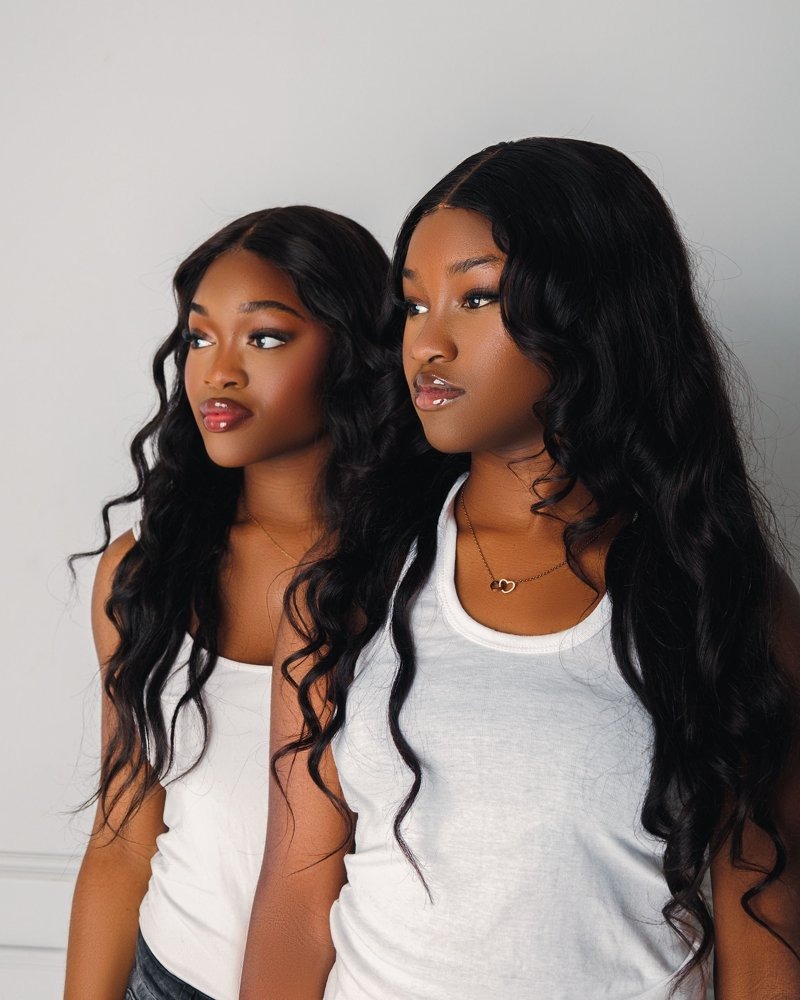
Now that you know what each one is, here is how they compare on the points that matter most when you are choosing a frontal vs closure wig.
This is the biggest difference. A closure covers only a small section at the top front, while a frontal covers the full hairline from ear to ear.
With a closure, the sides of your hairline are covered by the wefted part of the cap, so the hair falls forward to hide the edges. With a frontal, the whole front edge is lace, so the hairline shows all the way round. If you want a full, open hairline, the frontal wins. If you are happy with a neat parting and hair framing your face, a closure does the job well.
Styling freedom is where the frontal vs closure wig comparison leans towards the frontal.
With a frontal you can:
With a closure you can:
If you love to switch up your look every few days, a frontal gives you more room to play. If you mostly wear your hair down with one parting, a closure gives you everything you need.
A closure wig is the friendlier choice for beginners. There is less lace to cut, tint and lay flat, and many closure units can be worn glueless, held in place with combs and an adjustable band. You can put it on in a few minutes and take it off at night.
A frontal takes more time and skill. The lace has to sit flat along the whole hairline, which often means using gel, glue or adhesive spray, then styling the edges so they blend with your skin. Many women prefer to have a stylist install a frontal, at least the first few times. If you are just starting out, a closure or a glueless unit is usually the smoother path.
More lace means more care. A frontal’s hairline is exposed to sweat, oil and makeup all day, so the lace may start to lift and need to be laid again every few days, especially in hot, humid weather.
A closure needs far less attention. With a small piece of lace and little or no glue, there is less to lift and less buildup to clean. For both types, the general rule is to wash the wig after every 10 to 15 wears, depending on how much product you use, and to be gentle around the lace so the knots stay secure.
Heat is part of life in Lagos, so comfort matters. Lace is light and breathable, which means a frontal can feel airy across the front of the head. However, the glue or gel that often holds a frontal in place can soften when you sweat, causing the edges to lift.
A closure wig avoids most of that. Because it can be worn without adhesive, it stays secure in the heat and can be removed quickly to let your scalp breathe. For everyday wear in a hot climate, many women find a closure, especially a glueless one, the more comfortable option.
In a frontal vs closure wig comparison of the same hair type, length and density, the frontal usually costs more. There is more lace, and every strand on that lace is tied by hand, so it takes more work to make.
A closure gives you a natural parting for less money, which makes it a popular choice for a first wig or a daily unit. If the unit you really want is above your budget, installment payment plans are available on selected products. You pay a 50% deposit, then two further payments of 25%, with full payment completed within two months. Our FAQ page has the details.
There is no single winner in the frontal vs closure wig debate. The right choice depends on how you live and what you want from your hair.
Choose a closure wig if:
Choose a frontal wig if:
Many women end up owning both, a closure for the week and a frontal for the days they want to show off.
You will often see the word glueless next to a frontal vs closure wig listing, and it is worth understanding. Glueless is not a third type of lace. It simply describes how the unit stays on your head. A glueless wig is built with combs, an adjustable strap or an elastic band inside the cap, so it holds firmly without any adhesive.
Both closures and frontals can be made glueless, although closures suit this design best because there is less lace to keep flat. If you want to take your wig off every night, protect your edges from glue or simply get ready faster in the morning, a glueless unit is a smart pick. Our shop includes glueless options, such as the glueless 2 tone bounce wig.
Whichever side of the frontal vs closure wig choice you land on, a few simple habits will help the lace melt into your skin:
If styling is not your strong point, we can help. Our services include wig customisation, styling and personalised recommendations, so your unit arrives ready to wear. And if the lace on an older wig has lost its natural look, our Wig Revamp service can refresh the lace tint and bring the hair back to life.
A closure wig is usually better for beginners. It has less lace to manage, it is quicker to put on and it can often be worn without glue.
With good care, both can last a long time. A closure often holds up better with daily wear, because there is less lace exposed to sweat, glue and frequent handling.
Yes, some frontal units can be worn glueless with combs and an elastic band, although the hairline may not sit as flat as a glued install. Ask about glueless options before you buy.
It means the lace is 2 inches wide and 6 inches deep. This gives a narrow but long parting space, which is great for a clean, deep middle part.
The lace can be tinted to match your skin. As for the hair, only 100% human hair wigs can be safely coloured or bleached. Hair blend wigs are not recommended for colouring.
The frontal vs closure wig choice comes down to styling freedom against ease. A frontal gives you a full hairline and endless ways to wear your hair, while a closure gives you a natural parting with less work, less upkeep and a lower price. Think about how often you will wear the wig, how much time you want to spend on it and what your budget allows.
Ready to choose? Browse our collection of wigs to compare frontal and closure styles, or contact us on WhatsApp for personal advice. You can also visit our store at Balogun Market in Lagos and try the options for yourself.
Black hair will always be a classic, but there comes a day when you want something different. Maybe a warm brown for work, a honey
Walk into any wedding, office or owambe in Lagos and you will see it: long, glossy hair that falls dead straight and swings with every

You have found a wig you love, and then the product name hits you with words like frontal, closure, 2×6 or 13×4. If you are